Tuesday, 14 August 2012

Paper books I have bought this last month or so


'Gold' by Dan Rhodes and 'This is Life' by Dan Rhodes.

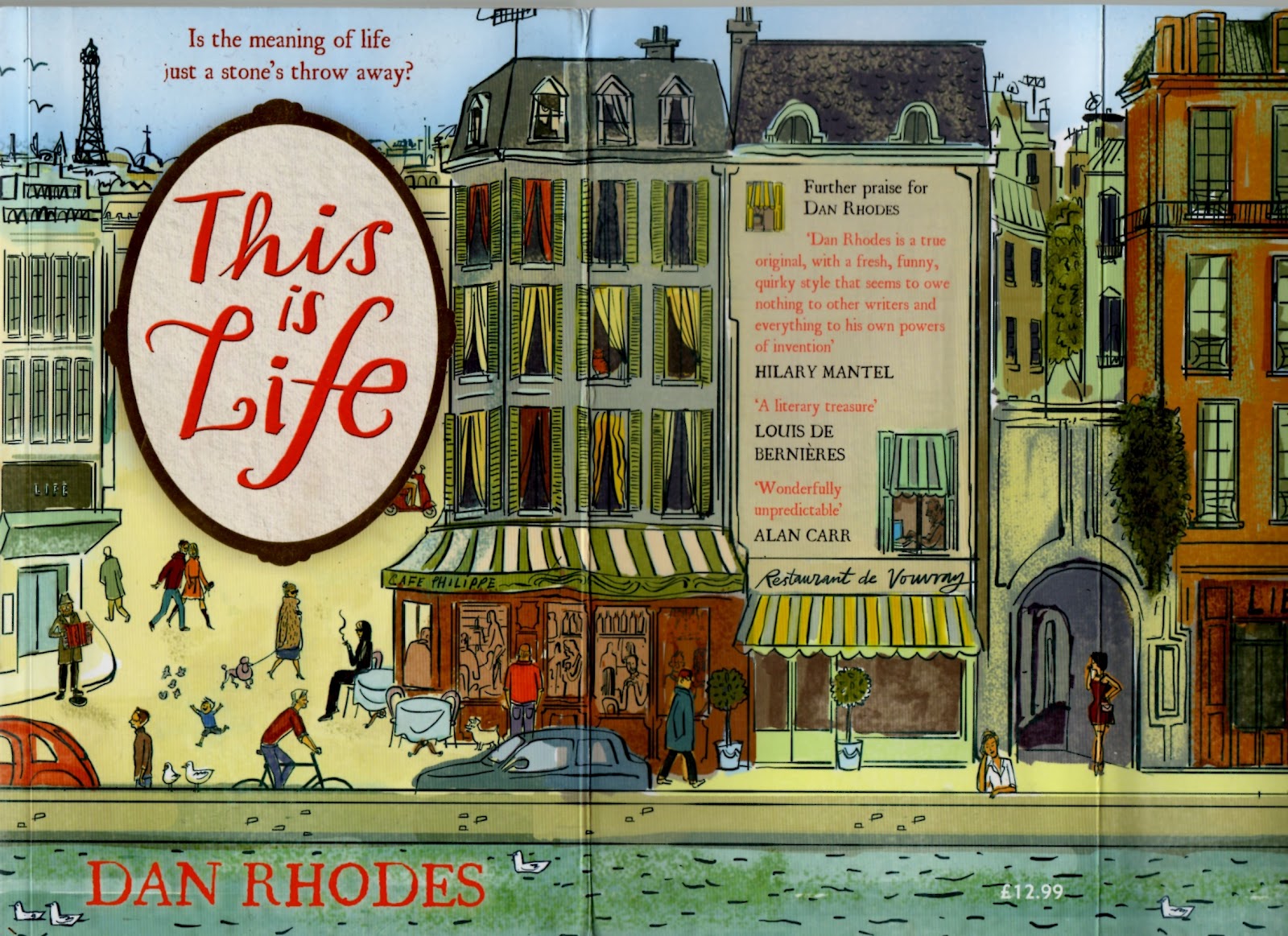


These are particularly noteworthy. I bought these in a charity shop in the New Forest somewhere and seeing as we we had planned to do a lot of walking, I didn't want to be carrying the weight of these books around with me, so I sent them to myself in the post and they were waiting for me when I got back from holiday. I also sent a Mystery Jets CD that I had bought in the same charity shop. I thought this was all a great success for the fun of obsolescent media. ?.

On the various online shops they have tried to replicate the browsing experience of going into an actual shop. Ebay/Amazon = online non-charity version of charity shops. They have similar items, items previous people have bought when they bought your chosen item. They show the most popular item in that category, but they can never replicate the efficiency of the information exchange in a real shop. 

The resolution of the pixels is much higher in real life and much more visual information can be displayed.

I read 'Gold' by Dan Rhodes yesterday. I spent most of it thinking it was not a good book. Only at the end could I see what a pleasing whole it actually was.

'The Book of Dave' by Will Self.


I had read in the newspaper that Will Self's next book was probably going to be longlisted for the Booker Prize. I went into City Books and asked them if they had it. It wasn't out yet but I bought another one, 'The Book of Dave', as recommended by the lady in the shop.

I've started reading it. It's bold and experimental and challenging, and a bit like a sci-fi London Ulysses. In some ways. In an interview, Will Self said he was always frustrated with how unchallenging post-modern literature can be. I would tend to agree with him, especially judging by the last few Booker Prize shortlists. He might be my new favourite contemporary author.

'Swamplandia' by Karen Russell.


This was also bought at City Books on the same occasion at the above book. I think it's important to support independent book shops (especially seeing as Amazon cheat their taxes) and this must be the best one in Brighton. They always have signings and talks, (last year I got a book signed by Harry Hill there as a Christmas present for my dad) and the people in there are always helpful and interested in talking about books.

I mainly bought this book because of the name. I do like exclamation marks. And made up words. It was a good book, certainly imaginative, certainly a new kind of world, but it wasn't as unconventional as I would have liked and I didn't like the ending.

'Food in England' by Dorothy Hartley.


Also built in City Books. I decided to treat myself after Ed had enthusiastically recommended it to me. It's a big comprehensive bible of England's pre-fifties food history, with lots of tender illustrations by the author. There's so much detail in it, I think after reading it you'd be able to imagine exactly what it would be like to eat in the past. Maybe you could write a novel about it, or a play, or a film.

'Collins Nature Guide to Trees of Britain & Europe' and 'Collins Nature Guide to Wild Flowers of Britain & Europe'.
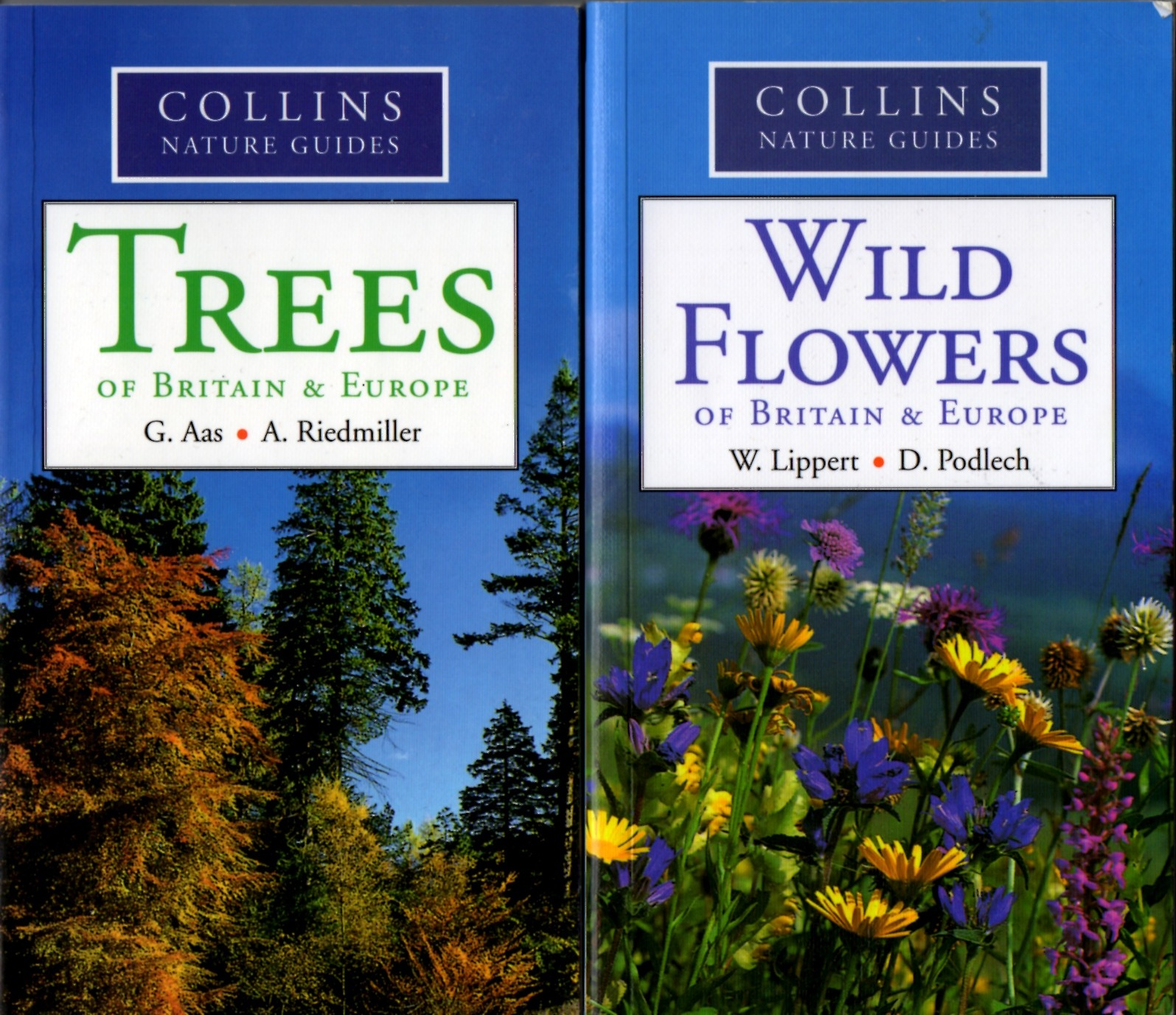


Both bought in the New Forest Wildlife Centre. Half price. They are have  efficient categorisations.

If anyone wants to borrow 'Gold' or 'Swamplandia' let me know.

The total weight of all these books is 2.368kg.

Sunday, 29 July 2012

Echoes of Tolkein in the opening ceremony of the Olympics


The Opening Ceremony of the Olympics on Friday night was spectacular and exciting, dark and bemusing. The story of Britain's history that made up most of the first part of the ceremony was particularly interesting and dark.

It seemed as if Danny Boyle had borrowed the overarching narrative of J.R.R. Tolkein's Lord of the Rings: the immense stage in the centre of the stadium began as an idyllic grassy countryside landscape with country folk dancing around maypoles and playing cricket. It had the peaceful hilly greenery of the Shire in Tolkein's Middle Earth. Even the people looked like hobbits from our zoomed out perspective.

As described in the words of the hymn, 'Jerusalem', which was played numerous times and in various forms during the ceremony, this 'green and pleasant land' was overtaken by the 'dark satanic mills' of the Industrial Revolution. It looked just like Mordor.

It was a horrible transformation, from the peace of the countryside to the pollution of industry. Was Danny Boyle expressing a Neo-Luddite, pixelled-wheels-type statement here, just like Tolkein was in the Lord of the Rings? In the Lord of the Rings, however, the evil of dark industry is destroyed and the countryside restored, whereas in the Olympic opening ceremony, the industry, though it is portrayed at first as having negative connotations, is a necessary evil, and leads to all the marvellous technologies of the 21st century. 

After the belching factories had destroyed the countryside greenery, Boyle focussed on the small stories of people who now live in the world produced by this industry; the mother driving her children home to their modern house; the teenagers in the discos, their texting. The polluting greed of the industrial revolution was worth it for our modern world and all its technological complexities. The dark mills were not satanic after all. Or Satan wasn't so bad after all.

The massive fiery Olympic rings looked like the One Ring of Tolkein mythology that, instead of being destroyed in Mount Doom, has been multiplied into five and has become even more powerful, and perhaps isn't as evil as we thought it was. 

Sunday, 8 July 2012

Tom Gauld illustration


This cartoon was in the Guardian book review yesterday.

Wednesday, 27 June 2012

One cherry change


I didn’t have time to have breakfast comfortably before I went to work so I decided to pick up some on the way.

At the station I went into Marks and Spencers and bought a smoothie. The boy who served me said whatever he said to me in a kooky and informal, mock-American kind of way. I hardly responded, hardly looked in his eyes. I said I didn’t want a receipt.

Next I went to get some blood oranges from the fruit stall. I hadn't been served by this man before, even though I frequent this blood orange vendor. I have spoken to whom I think owns the stall before, a husky bearded cockney; he foists free samples of his wares upon all the passers-by. I always decline the offer because I have usually just cleaned my teeth after the breakfast I usually have before I leave for work. 

Today as I approach the blood oranges I acknowledge to myself the possibility of accepting the free sample due to lack of dental mintation. It not being Samson this time, I supposed the chance of free sample was diminished. I helped myself to his blood oranges and said I didn’t need a bag and gave the new boy my money: £1.50 – a pound coin, 2 20p’s and 2 5p’s. He said to me, with a knowing air of faint humour, ‘here is your change’ and he gave me a cherry. I was naturally delighted, thanked him to his eyes and then I turned away and off to get some coffee.

The cherry was still in my mouth and I was extracting the stone with my indelicate fingers as the Australian coffee vendor, one of three, asked if he could be of my service. I said a flat white please. He passed the message down the line and I got a stamp on my card. 

The girl in front of me asked if she could have some sweeteners for her coffee, she was wearing a big white furry woollen hat and was wrapped up in black clothing. I noticed her glittering ear studs. Her face was mild and eastern European. The coffee vendor found the sweetener dispenser and asked her how many? One? She said four. He obliged and exchanged a perplexed look with my smile. But it wasn’t as simple as just perplexion, no, he seemed embarrassed, put out and his composure did not immediately return to him as you might have expected it to, no, it lingered, as if he didn’t know how to handle the awkwardness of someone wanting 4 sweeteners in her coffee. She was completely oblivious to this, involved in her coffee, in stirring it, perhaps moody in the morning, not willing to give anyone the chance of any kind of joke perplexion.
And then I walked away and the scene ended.

Saturday, 9 June 2012

The future according to David Byrne in the eighties


These are the lyrics to David Byrne's song 'In the Future' from the album 'The Knee Plays' which was the soundtrack to an opera:

In the Future
In the future everyone will have the same haircut and the same clothes.
In the future everyone will be very fat from the starchy diet..
In the future everyone will be very thin from not having enough to eat..
In the future it will be next to impossible to tell girls from boys, even in bed.
In the future men will be "super-masculine" and women will be "ultra-feminine."
In the future half of us will be "mentally ill."
In the future there will be no religion or spiritualism of any sort.
In the future the "psychic arts" will be put to practical use.
In the future we will not think that "nature" is beautiful.
In the future the weather will always be the same.
In the future no one will fight with anyone else.
In the future there will be an atomic war.
In the future water will be expensive.
In the future all material items will be free.
In the future everyone's house will be like a little fortress.
In the future everyone's house will be a total entertainment center.
In the future everyone but the wealthy will be very happy.
In the future everyone but the wealthy will be very filthy.
In the future everyone but the wealthy will be very healthy.
In the future TV will be so good that the printed word will function as an art form only.
In the future people with boring jobs will take pills to relieve the boredom.
In the future no one will live in cities
In the future there will be mini-wars going on everywhere.
In the future everyone will think about love all the time.
In the future political and other decisions will be based completely on opinion polls.
In the future there will be machines which will produce a religious experience in the user.
In the future there will be groups of wild people, living in the wilderness.
In the future there will be only paper money, which will be personalized.
In the future there will be a classless society.
In the future everyone will only get to go home once a year.
In the future everyone will stay home all the time.
In the future we will not have time for leisure activities.
In the future we will only "work" one day a week.
In the future our bodies will be shriveled up but our brains will be bigger.
In the future there will be starving people everywhere.
In the future people will live in space.
In the future no one will be able to afford TV.
In the future the helpless will be killed.
In the future everyone will have their own style of way-out clothes.
In the future we will make love to anything anytime anywhere.
In the future there will be so much going on that no one will be able to keep track of it.


Saturday, 2 June 2012

The power of books in Roald Dahl's 'Matilda'


We went to see Matilda the musical in London and it was an unexpectedly overwhelming experience. There's something about a musical, with all the group choruses and explicit emotion, that can be very moving, and for me the story of Matilda is especially powerful. Roald Dahl's characters are so polarised: either nasty, terrible people or magical, intelligent and generous. When the good people win, it's so universal, so resoundingly comforting.

Matilda is about books. She reads and reads as her parents watch TV and lie and insult her for her pursuits. Books give her the emotional and intellectual education her parents and television have failed to give her. Books give her imagination and a thirst for knowledge, but also a strong sense of morality. She is taught right and wrong by the narrative cadences of the stories she reads. (and if take a step back, we see that Roald Dahl is also performing the same role to children everywhere in the real world by writing this very story) Irrespective of her corrupting parents, Matilda grows into a generous girl with a fierce sense of morality and justice. She helps her teacher, Miss. Honey to reclaim the house the evil Trunchball stole from her (by murdering her father) and Matilda even learns Russian so she can read Dostoyevsky in the language it was intended to be read in, which ultimately helped her to stop the Russian mafia from killing her family.

The magic of books is made literal in Matilda, when she finds she can use her mind to move objects. The implication is that books can give you magical powers, or perhaps that when extreme intellect is nurtured by books, magical powers of imagination and telekinesis are produced. These powers are also probably a result of the psychological hardships Matilda has endured throughout her young life. A latent power builds in her, an extreme bottling up of emotional energy, until it bursts out supernaturally. Roald Dahl was such a great writer. There are so many levels to Matilda, and all good art should be both profound and simple at the same time.

___________________________________


Matilda the musical made me think about whether our relationship with books has changed since Roald Dahl wrote the original story, i.e. are books still such invaluable sources of knowledge and culture to those who are not granted proper upbringings? In a first world country, does the internet provide just as ably this knowledge, or is the internet becoming the equivalent of the television Matilda's parents so insistently praise in place of books? 'Why are you reading those awful books when we've got the internet?' I could easily imagine a lazy parent saying that to a child, 'I'm not buying you books, just go on the internet.' And perhaps it does become difficult to argue with that reasoning when money is tight.

The internet is a beast of varied goodness - though it holds vast information, vast educational potential, we spend most of our times idly on it. And this can of course be said for the television Matilda is so forcefully encouraged to consume: television is not all bad, it has great potential to educate. I suppose the point (one of the points) I'm making is: books are far less corrupting than other media because of the effort it takes to read them. Though they have the potential to corrupt, I think insidiousness thrives in ease of consumption. That books have great power for good is undeniable; whether or not that power is reliant on them being physical objects remains unproven.

Jay Rayner: Ebook adventurer


On June 1st Penguin Books released a book by Jay Rayner, Observer restaurant critic, called 'My Dining Hell: Twenty Ways To Have A Lousy Night Out'. It's a collection of some of his most virulent bad reviews of restaurants. This book will only be available as an ebook.

Speaking on Radio 4, Mr. Rayner said releasing it as an ebook only had various advantages: the whole publishing process was bypassed and what is a rather slight collection can be brought out quickly and also it means he can sell it for only £1.99, 'the price of an expensive bag of crisps'. 

This is the first mainstream instance I have encountered of an ebook only release. I should imagine this will become more common and who would argue with that kind of value: £1.99 for an entertaining little compendium?